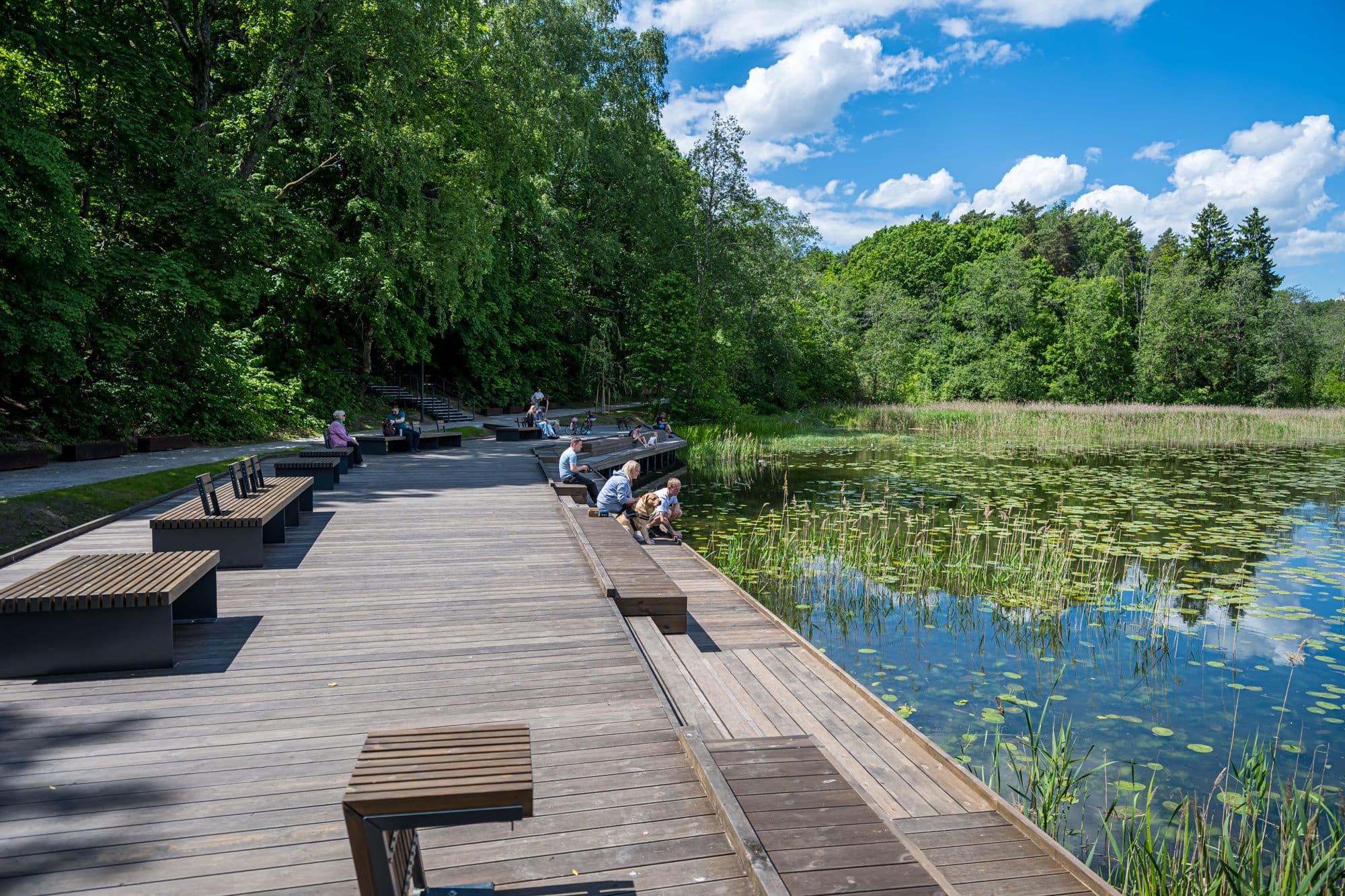
Thermally modified wood has become one of the most talked-about building materials in European architecture and construction over the past decade. It turns up on high-end residential facades, boutique hotel terraces, and contemporary cladding projects from Helsinki to Warsaw. But what is actually happening inside those boards? How does heating a piece of pine make it last 25 years outdoors without a single chemical being added?
This is a complete guide to the thermal modification process — what it is, how it works at a material level, and what it means in practice for anyone specifying or buying thermally modified timber.
The Basic Principle
Wood is a biological material. Its durability problems — rot, fungal attack, dimensional instability — all stem from the same root cause: it absorbs water. When wood absorbs moisture, it expands. When it dries out, it contracts. Repeat this cycle enough times and the board cracks, warps, and eventually begins to decay as fungal organisms exploit the moisture and the organic compounds within the wood’s cell walls.
The thermal modification process addresses this at a structural level. By applying high heat in a controlled environment, the internal chemistry of the wood is permanently changed — not just on the surface, but throughout the entire board. The result is a material that absorbs significantly less water, resists biological attack, and behaves far more predictably in outdoor conditions.
The Three Phases of Thermal Modification
The full treatment cycle typically runs between 24 and 48 hours and takes place in a sealed industrial kiln. The process is divided into three distinct phases.
Phase 1: Initial Drying
The timber enters the kiln with a natural moisture content — typically between 40% and 60% for fresh-cut softwood. In the first phase, the temperature is gradually raised to around 100°C, driving out the free water within the wood cells. This drying phase is critical: if moisture is not removed evenly before higher temperatures are applied, the boards can crack under thermal stress.
At Termo-Mediena, the drying phase is carefully controlled to ensure uniform moisture reduction across every board before moving to the next stage.
Phase 2: High Temperature Treatment
This is where the permanent structural change occurs. The kiln temperature is raised to between 190°C and 215°C — the precise temperature depends on the species being treated and the target performance class. Steam is used throughout this phase to prevent combustion and to help conduct heat evenly into the wood.
At these temperatures, the hemicellulose within the wood cell walls begins to break down. Hemicellulose is the component that fungi use as a food source, and it is also the primary driver of moisture absorption. As it degrades, the wood’s ability to take on water is permanently reduced — by up to 40% compared to untreated timber of the same species.
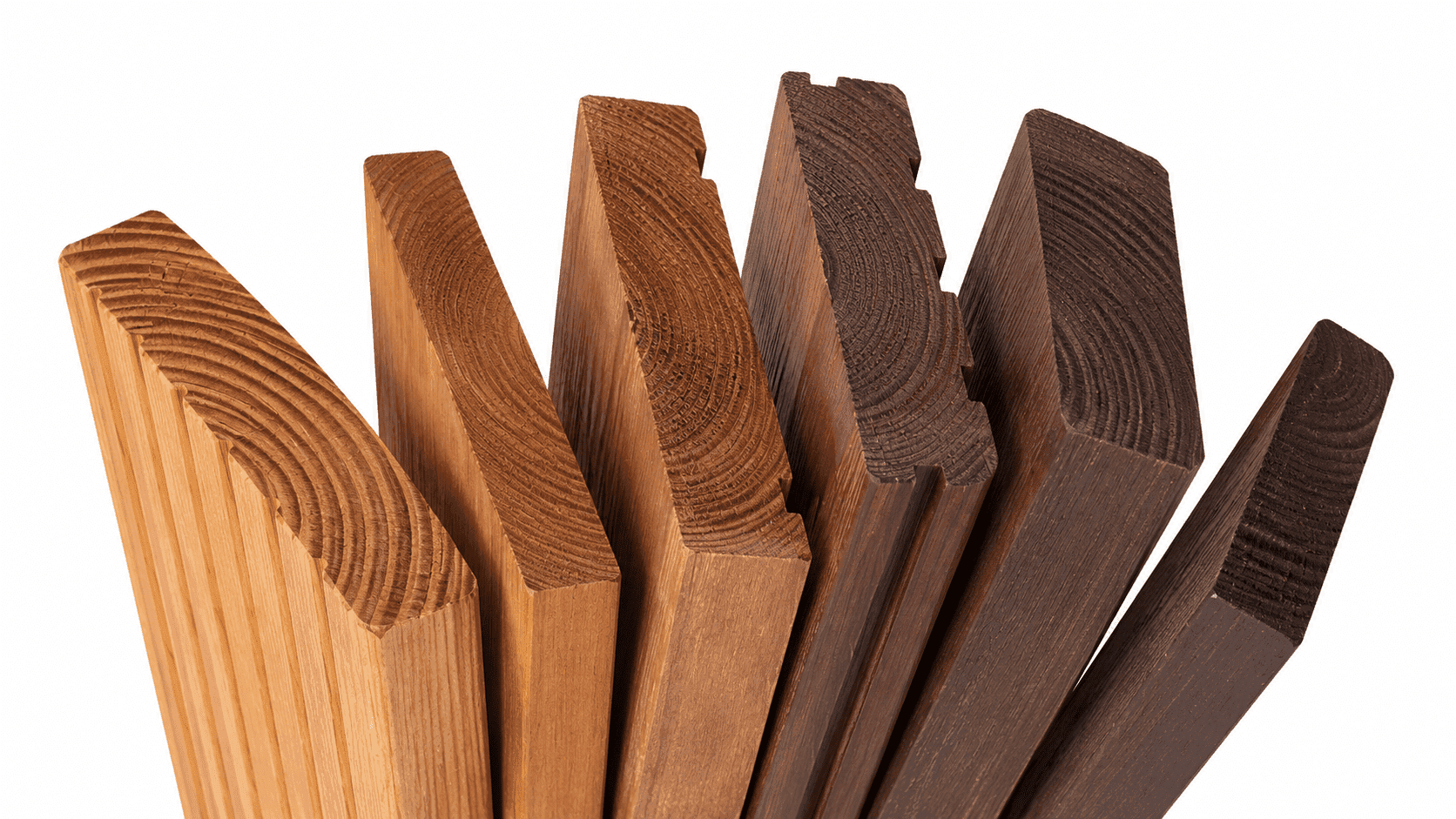
A secondary chemical change also occurs: the sugars within the wood (polysaccharides) undergo a caramelisation process. This is what produces the characteristic deep brown colour of thermally modified wood — it is not a dye or stain, but a natural result of the chemistry.
Two treatment classes are recognised across the industry:
- Thermo-S (Stability class): treated to approximately 190°C. Enhanced dimensional stability and moderate biological resistance. Suitable for interior and sheltered exterior applications.
- Thermo-D (Durability class): treated to approximately 215°C. Full biological resistance and maximum dimensional stability. Suitable for direct outdoor exposure including decking, facade cladding, and other high-exposure applications.
Phase 3: Conditioning and Cooling
After the high-temperature phase, the kiln is gradually cooled and humidity is reintroduced. This conditioning phase brings the timber’s moisture content back up to a stable level — typically 4–7% — that is appropriate for storage, transport, and installation.
Cooling too quickly would create internal stresses and surface cracking. The controlled conditioning phase ensures the boards arrive at their final dimensions in a stable state, ready for processing and installation.
What Changes — and What Doesn’t
Understanding what thermal modification actually changes helps clarify both the advantages and the appropriate applications.
What improves:
- Moisture absorption: reduced by 30–50%, depending on treatment class and species
- Dimensional stability: boards swell and shrink significantly less with seasonal humidity changes
- Biological durability: rated Class 1–2 under EN 350 standards after Thermo-D treatment (naturally durable, equivalent to oak or teak for above-ground applications)
- Appearance: deeper, richer colour from the caramelisation of wood sugars
What changes in ways to be aware of:
- Mechanical strength: the modification process reduces the wood’s bending strength by approximately 10–15%. This is why thermally modified wood is not used for structural load-bearing applications — posts, beams, foundation framing. For non-structural applications (decking, cladding, screening), this is not a relevant factor.
- Brittleness: thermally modified wood is slightly more brittle than untreated timber. Pre-drilling before fixing, and using stainless steel fasteners, is strongly recommended.
Species Used in Thermal Modification
The process works with any wood species, but some are more commonly used than others based on availability, cost, and the characteristics of the final product.
Pine (Scots pine, Pinus sylvestris) is the most widely used species for thermally modified products in Northern and Central Europe. It is abundant, affordable, and responds well to the process, producing a warm caramel-brown material with good dimensional stability. Our terrace boards and facade cladding profiles at Termo-Mediena are primarily produced in thermally modified pine.
Ash produces a paler, more uniform result with excellent hardness and a refined grain. Premium choice for interior applications and visible architectural work.
Birch gives a fine-grained, consistent result — often used for sauna benches, interior panelling, and high-end furniture.
Performance in Practice
The European market for thermally modified wood has been active since the mid-1990s, which means there are now decades of real-world installation data to draw on. Buildings in Finland, Sweden, and the Baltic states have thermally modified cladding installed in the 1990s and early 2000s that continues to perform without structural failure or significant maintenance.
The key real-world performance characteristics that projects consistently report:
- Boards installed outdoors maintain structural integrity without treatment for 25+ years in above-ground applications
- Dimensional movement is dramatically reduced compared to untreated or pressure treated alternatives — expansion and contraction is typically less than 1% across the board width under normal seasonal conditions
- Biological attack (rot, fungal decay) does not occur in properly installed above-ground applications, because the food source for fungi has been removed from the cellular structure
Environmental Credentials
Thermal modification uses no added chemicals. The process requires heat and steam — both of which dissipate completely. The final product contains nothing beyond the wood itself. This makes it fully safe for applications near water, in pool surrounds, and in soil contact for non-structural applications.
The energy required for the kiln process is the main environmental input. Responsible manufacturers offset this through sourcing from certified sustainable forestry (PEFC or FSC certified timber) and, in some cases, using biomass from the production process itself as kiln fuel.
At Termo-Mediena, all timber is sourced from Lithuanian and Scandinavian certified sustainable forests. The annual production capacity at our Vilnius facility is 4,500 m³.
Practical Guidance for Specifiers
A few points worth knowing before specifying thermally modified wood for a project:
Fastening: Always pre-drill. The slightly increased brittleness means screwing directly into board ends without pre-drilling can cause splitting. Stainless steel fasteners are required — other metals can corrode due to the mild acidity of the modified wood.
Gaps: The recommended installation gap is approximately 6% of the board width (roughly 5–8mm for standard decking profiles). Although thermally modified wood moves significantly less than untreated timber, some seasonal movement still occurs.
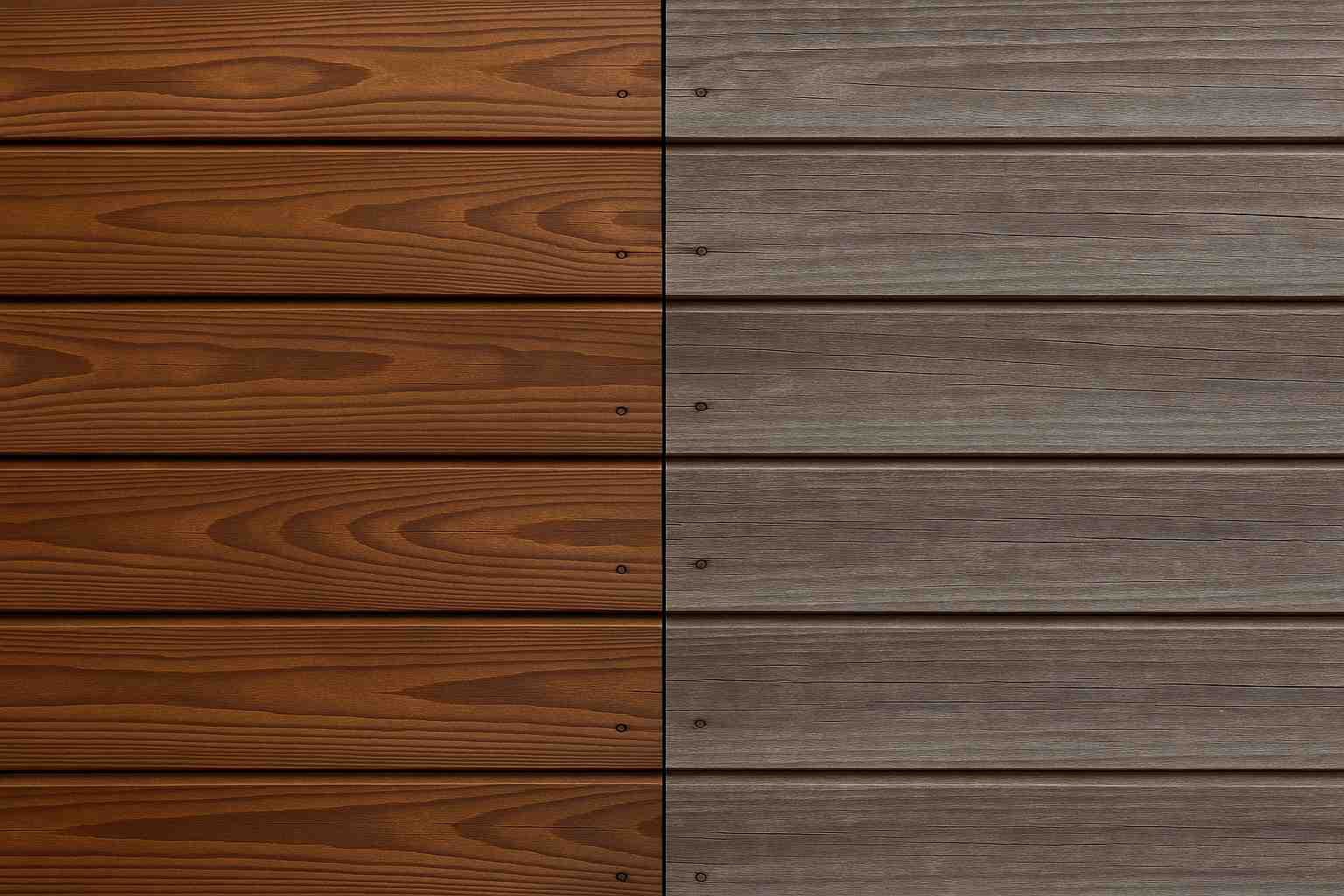
Finishing: The boards can be left untreated — they will naturally silver to a consistent grey over 1–2 seasons. To preserve the original caramel-brown colour, apply a tinted oil-based finish annually on horizontal surfaces (terraces) and every 3–4 years on vertical surfaces (facades).
End sealing: Board ends absorb more moisture than faces and edges. Sealing cut ends with wax or end-grain sealer is recommended, particularly for terrace applications.
Interested in specifying thermally modified pine for your next project? Browse our full range of terrace and facade profiles or get in touch to discuss volumes and lead times with our team.