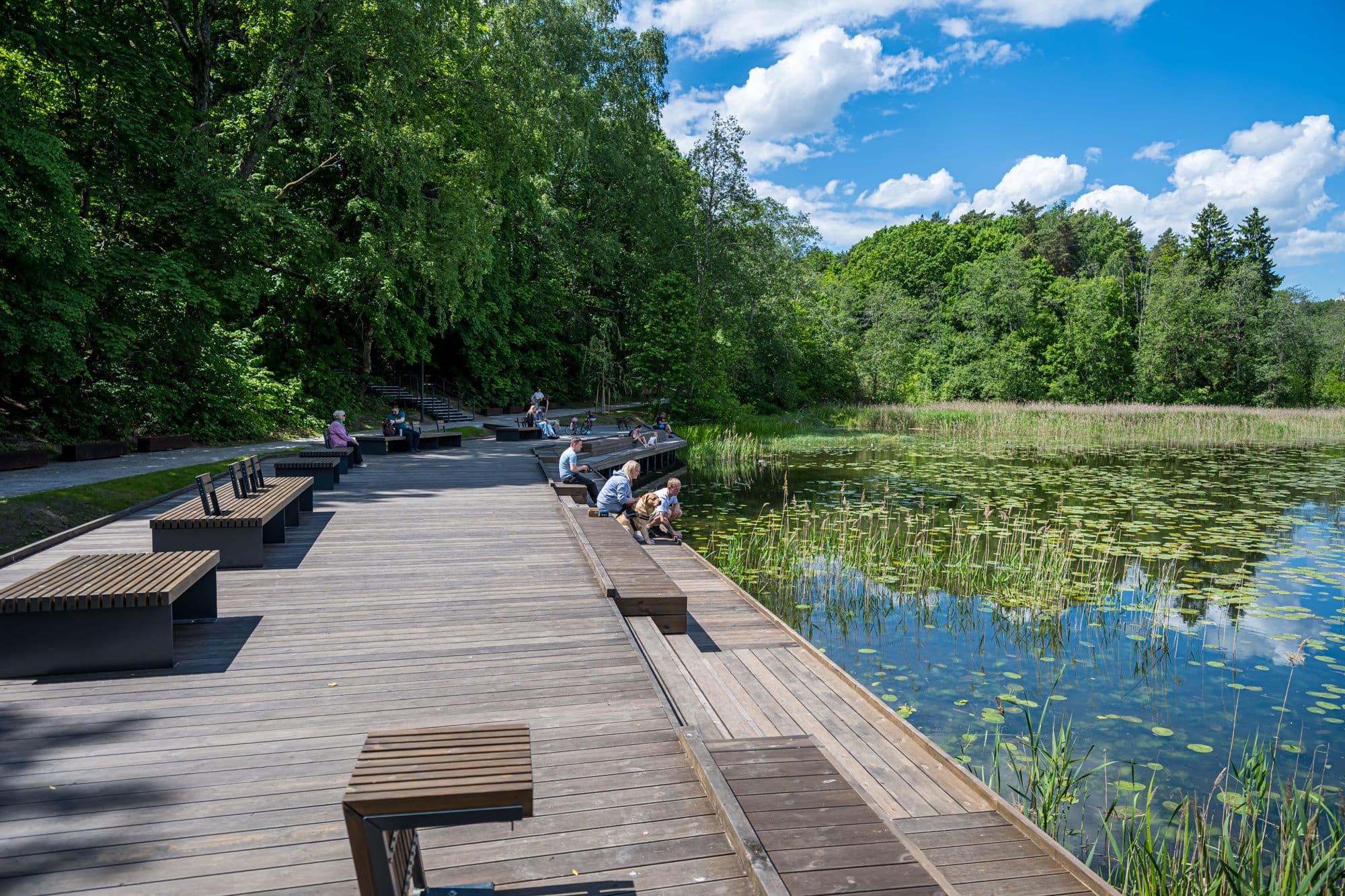
If you’re planning a terrace, deck, or exterior cladding project, you’ve probably found yourself comparing two popular options: thermally modified wood and pressure treated lumber. Both are designed to survive outdoors. Both cost more than untreated timber. And both promise durability. But that’s roughly where the similarities end.
This guide breaks down the real differences — how each is made, how long each lasts, what maintenance looks like, and which one makes more sense for your project.
What Is Pressure Treated Wood?
Pressure treated wood (sometimes called tanalised or chemically treated timber) is softwood — usually pine or spruce — that has been force-saturated with chemical preservatives. The process involves placing timber in a pressurised tank, removing the air, and pushing fungicidal compounds deep into the wood fibres.
The most common preservative today is copper-based (micronised copper azole or alkaline copper quaternary). Earlier formulations used chromium and arsenic — compounds now banned for residential use in the EU due to toxicity concerns.
The result is wood that resists rot and insect damage. It works. It’s cheap. It’s widely available. But there are trade-offs worth understanding before you commit to a full terrace installation.
What Is Thermally Modified Wood?
Thermally modified wood starts life as the same softwood — pine, ash, or birch — but instead of chemicals, it’s treated with heat. The timber is placed in a sealed kiln and heated to between 180°C and 215°C using steam and high temperature. No chemicals are added at any point.
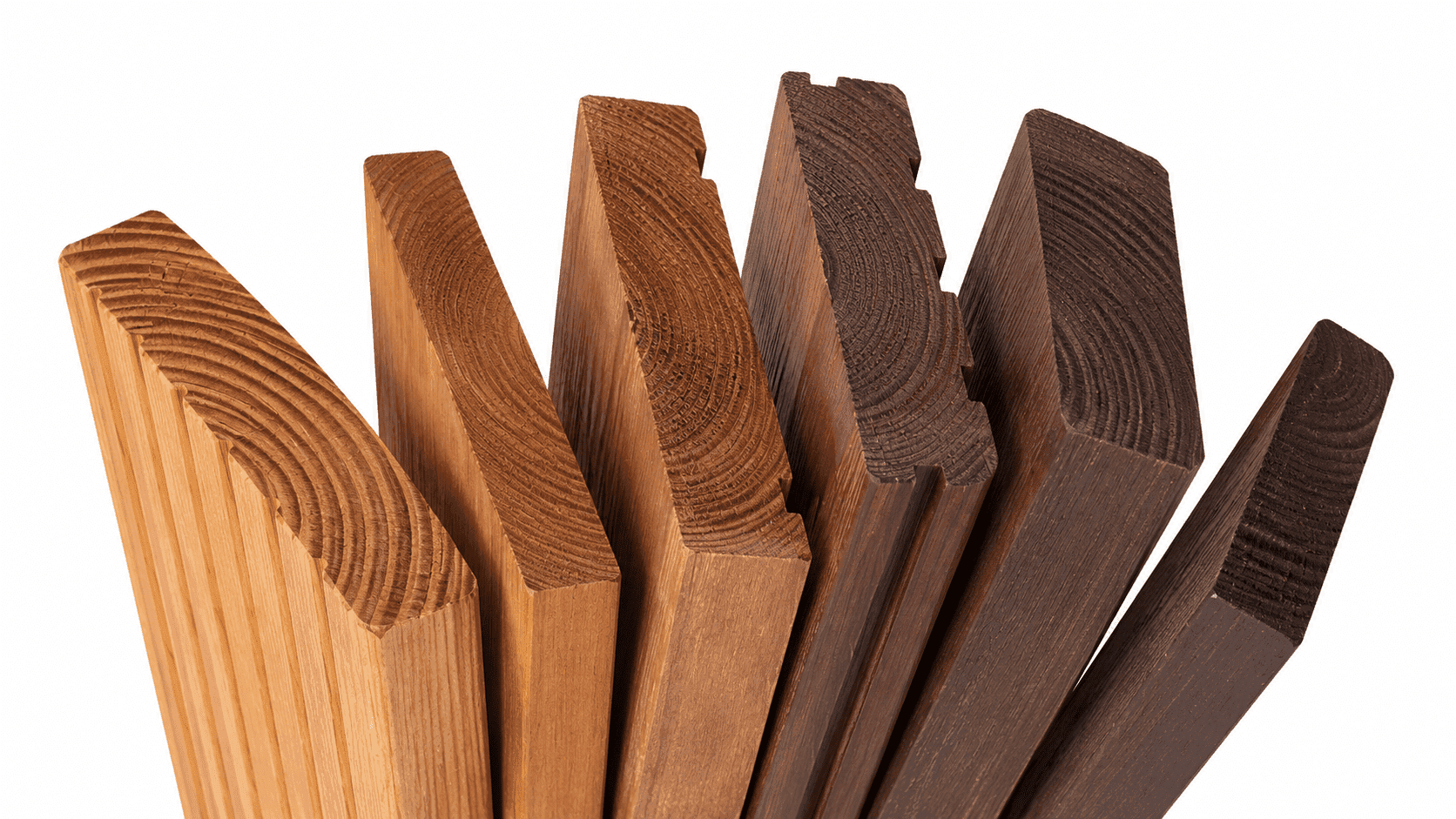
At those temperatures, the wood’s cell structure permanently changes. The hemicellulose — the component that fungi use as a food source, and that causes wood to absorb moisture — breaks down. What remains is a denser, darker, more stable material that behaves very differently from the timber it started as.
The process has been used commercially in Europe since the 1990s and is now well-established across Scandinavia, the Baltic states, and Central Europe.
How Long Does Each Last Outdoors?
This is the question most buyers ask first, and the answer depends on the application.
Pressure treated wood typically carries a 15–25 year structural warranty for above-ground applications. In practice, outdoor decking made from pressure treated timber often shows visible degradation — warping, splitting, greying — within 8–12 years under normal Baltic or Central European weather conditions. The chemical treatment slows decay but doesn’t eliminate the wood’s tendency to absorb moisture and move with seasonal humidity changes.
Thermally modified wood carries a typical outdoor lifespan of 25+ years for above-ground applications (decking, cladding, screening). Because the modification process permanently reduces the wood’s moisture absorption by up to 40%, the boards are significantly more dimensionally stable — they swell and shrink far less with seasonal changes. This stability is one of the main reasons architects and builders in Northern Europe have increasingly specified thermally modified wood over pressure treated alternatives.
At Termo-Mediena, our thermally modified pine boards carry a 25+ year warranty on structural integrity and biological resistance — not as a marketing claim, but because the science behind the process genuinely supports it.
Chemical Safety: A Growing Concern
For residential projects — especially terraces near pool areas, children’s play spaces, or vegetable gardens — the chemical content of pressure treated wood is worth considering seriously.
The copper-based preservatives used in modern pressure treated lumber are significantly safer than older chromium-arsenic formulations, but they are not inert. They can leach into surrounding soil and water over time, particularly in wet conditions. EU regulations increasingly restrict the use of chemically treated timber in applications where contact with food, water, or skin is likely.
Thermally modified wood contains no added chemicals. The modification is permanent and occurs at a structural level — it does not leach, does not require reapplication, and poses no toxicity risk to people, pets, or planted areas. For pool surrounds, family terraces, and food gardens, this is a meaningful practical difference.
Maintenance Requirements
Pressure treated wood needs regular attention to maintain its appearance and structural integrity. Typically: cleaning annually, re-staining or re-sealing every 2–3 years. Without consistent maintenance, pressure treated boards can crack, splinter, and develop surface mould fairly quickly — particularly in climates with wet winters and dry summers.
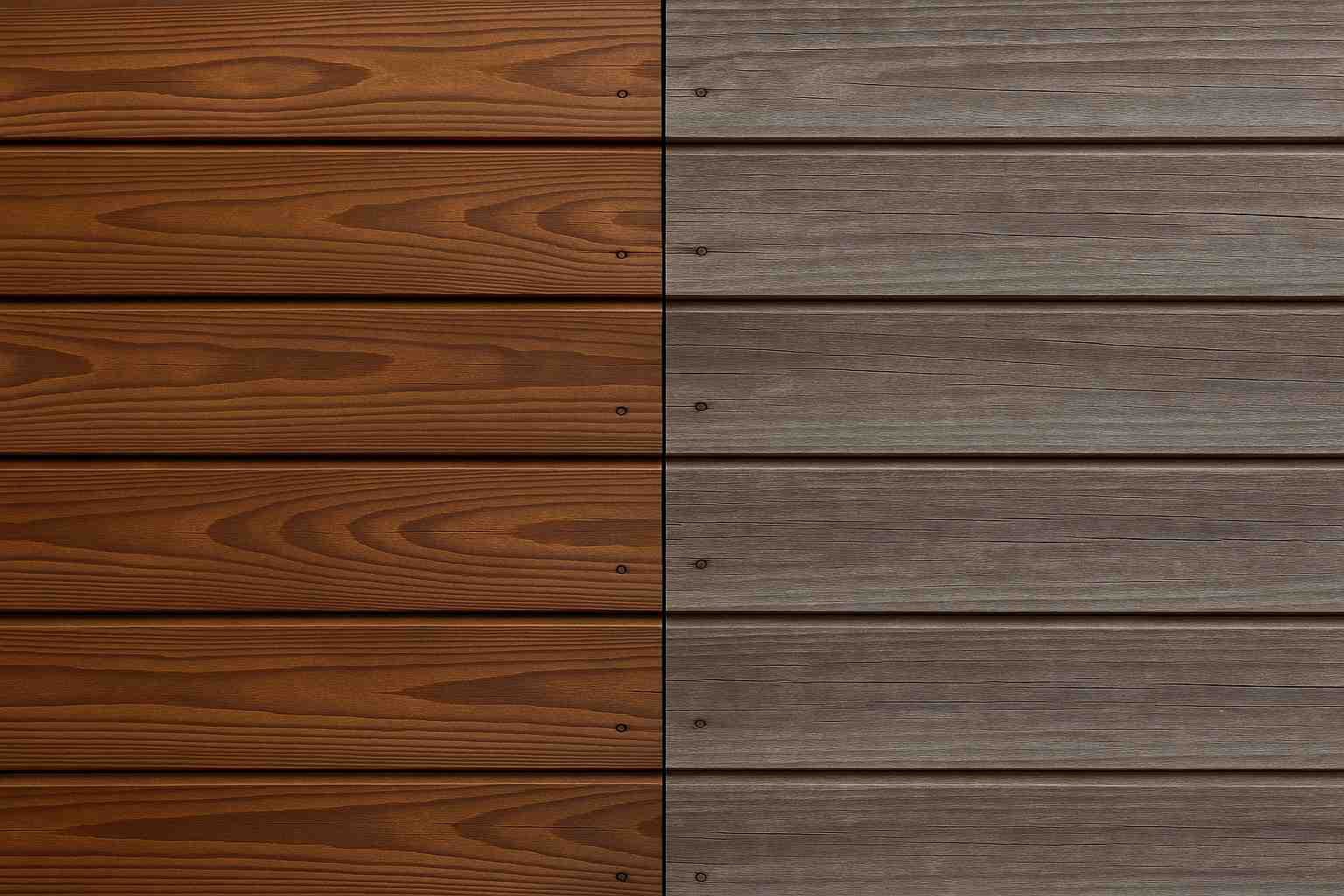
Thermally modified wood is considerably lower maintenance. The boards can be left untreated and will naturally silver to a calm grey — similar to untreated teak or western red cedar. For those who want to preserve the original caramel-brown colour, an annual application of tinted oil is sufficient. No stripping, no sanding, no chemical treatments required.
Appearance and Aesthetics
This is subjective, but worth addressing. Pressure treated pine is green-grey when fresh and fades to a nondescript tan without regular staining. Achieving a consistent, attractive appearance requires ongoing maintenance investment.
Thermally modified wood has a naturally rich, warm colour — a deep caramel-brown that results directly from the heat treatment process. It looks like an expensive hardwood and requires no staining to achieve it. Over time, if left untreated, it silvers evenly to a clean grey that many homeowners and architects actively prefer.
Working With Each Material
Both materials work similarly with standard carpentry tools. One important note for thermally modified wood: because the cellular structure has changed, the material is slightly more brittle than untreated timber. Pre-drilling holes before fixing is strongly recommended to avoid splitting, particularly at board ends. The same applies to pressure treated wood in very cold conditions.
For fasteners, stainless steel is the correct choice for thermally modified wood — the slight acidity produced during the modification process can corrode standard steel over time.
Cost Comparison
Pressure treated timber is typically the cheaper option upfront. A standard pressure treated decking board runs roughly €15–20 per m² before installation. Thermally modified pine terrace boards from Termo-Mediena start from approximately €21–24 per m² depending on profile and volume — a meaningful difference, but not a dramatic one.
When you factor in reduced maintenance costs over a 10–15 year period, thermally modified wood frequently comes out cheaper on a lifecycle basis. There’s no re-staining, no chemical treatments, and significantly less chance of having to replace warped or cracked boards after a harsh winter.
Which Should You Choose?
Choose pressure treated wood if: you have a tight upfront budget, the application involves ground contact or structural load bearing (posts, foundation framing), and you’re comfortable with regular maintenance.
Choose thermally modified wood if: you’re building a terrace, deck, facade, or screening feature that will be visible and used for years; you want minimal long-term maintenance; you’re building near water, a pool, or a garden; or sustainability and chemical-free materials matter to your project or clients.
For residential terraces, exterior cladding, and architectural screening — the applications where appearance and longevity both matter — thermally modified wood is consistently the stronger choice.
Termo-Mediena manufactures thermally modified pine terrace boards and facade cladding in Lithuania, supplying direct to contractors, architects, and homeowners across Europe. Browse our terrace board profiles or request a quote for your project.